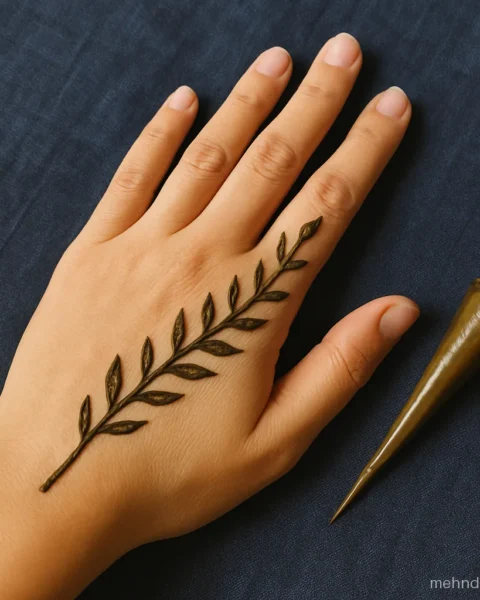
Learning how to make mehndi cone at home is easy, and a fresh homemade cone gives cleaner lines and a darker stain than most shop cones. In this guide you will make natural paste from henna powder, lemon, sugar and oil, roll a cello cone, and store the extras.
A homemade mehendi cone has no hidden chemicals, so you know what goes on your skin. Keep about 12 hours in hand, because the paste needs time to rest. Many people also call it mehandi paste; it is the same thing.
Making Natural Mehndi Paste at Home
Good paste is the secret behind every clean line and dark stain. These four steps show the paste from dry powder to a ready, rested mix.
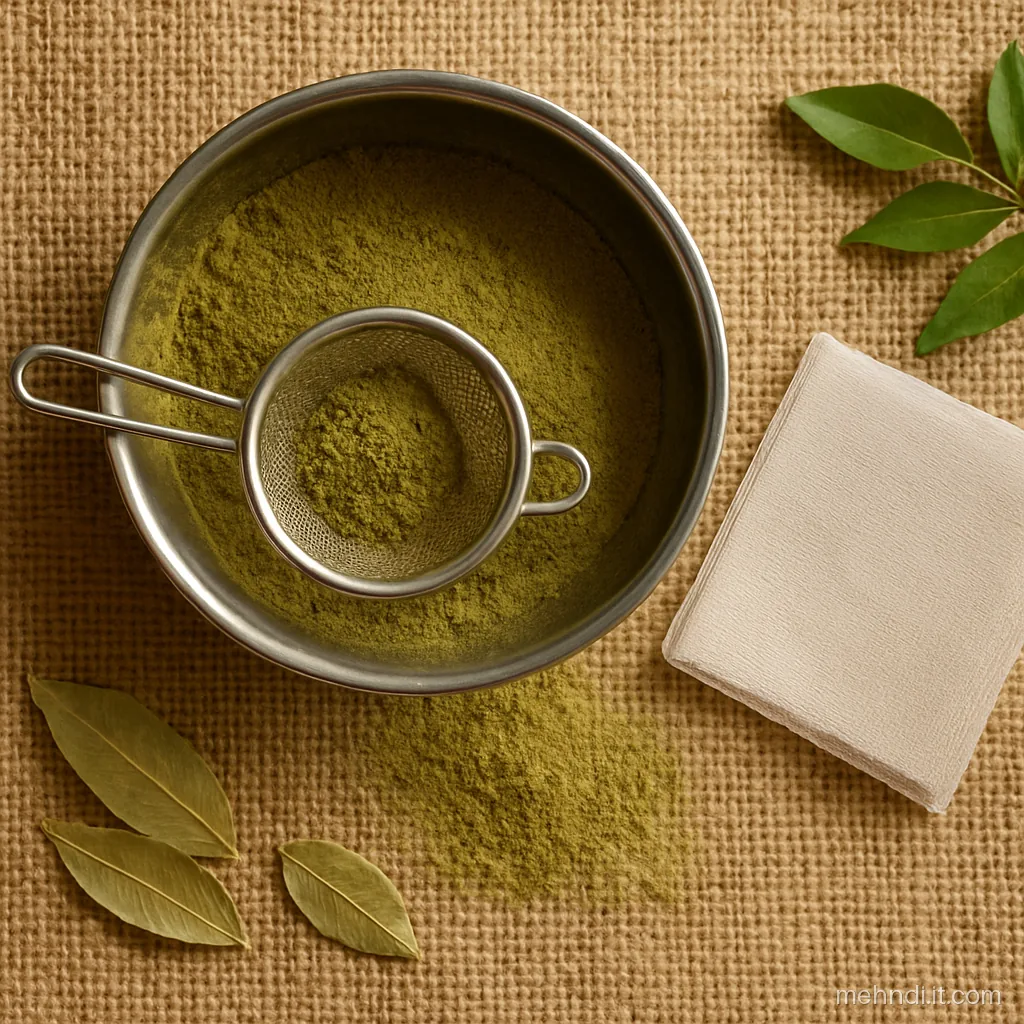
1. Sifting Henna Powder
Sift the powder twice through a fine strainer or a nylon cloth. Lumps block the cone tip later. Takes 5 minutes.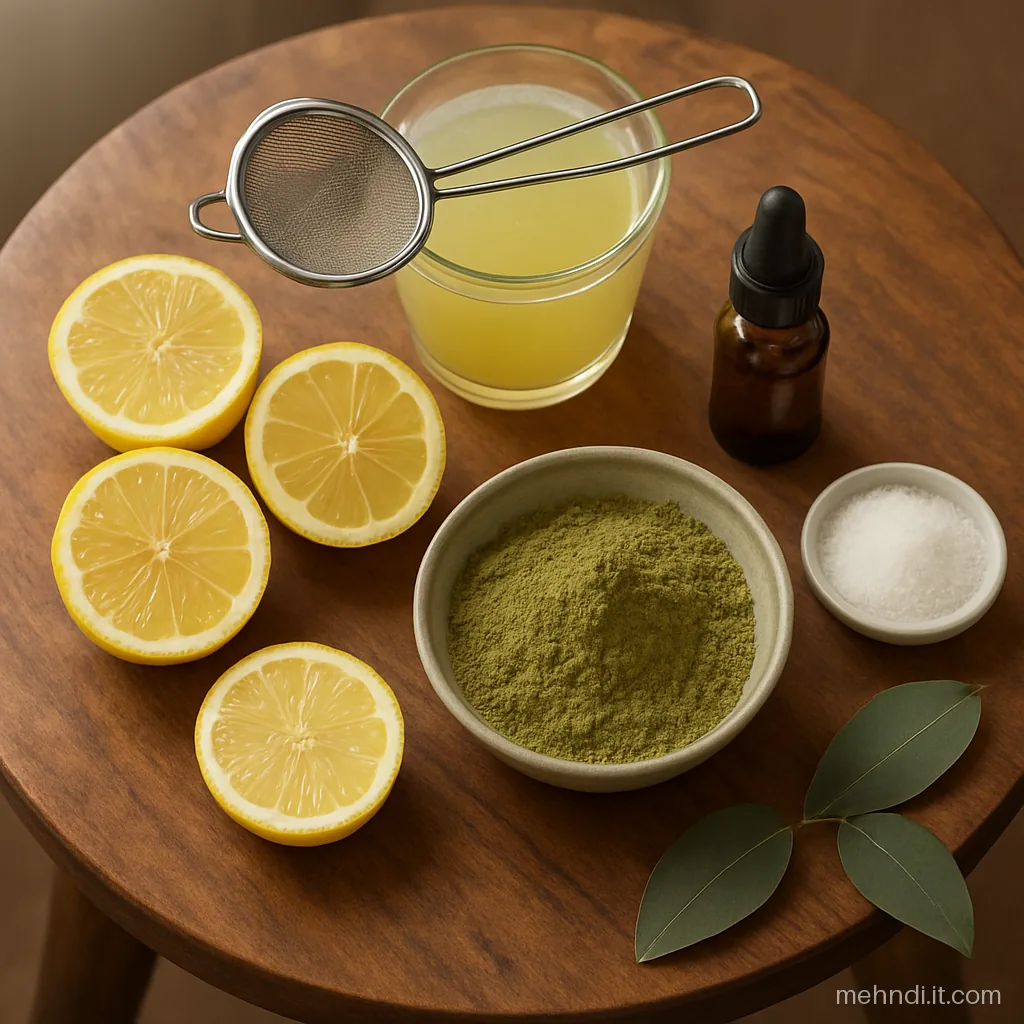
2. Lemon, Sugar and Oil Set
Strain the lemon juice before adding it, so no pulp goes into the paste. Getting this ready takes 5 minutes.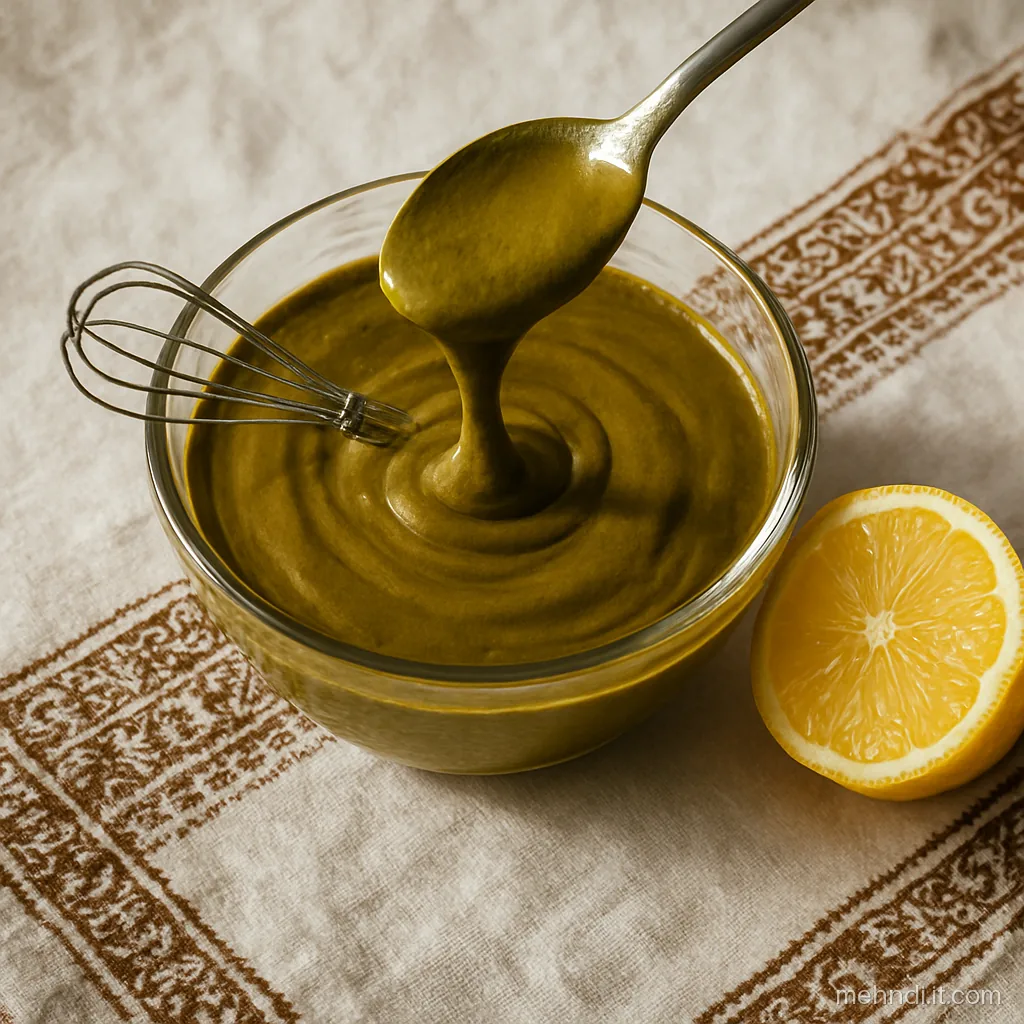
3. Toothpaste Texture Paste
Add the lemon juice a spoon at a time and stop when the paste falls off the spoon in a slow ribbon. Mixing takes 10 minutes.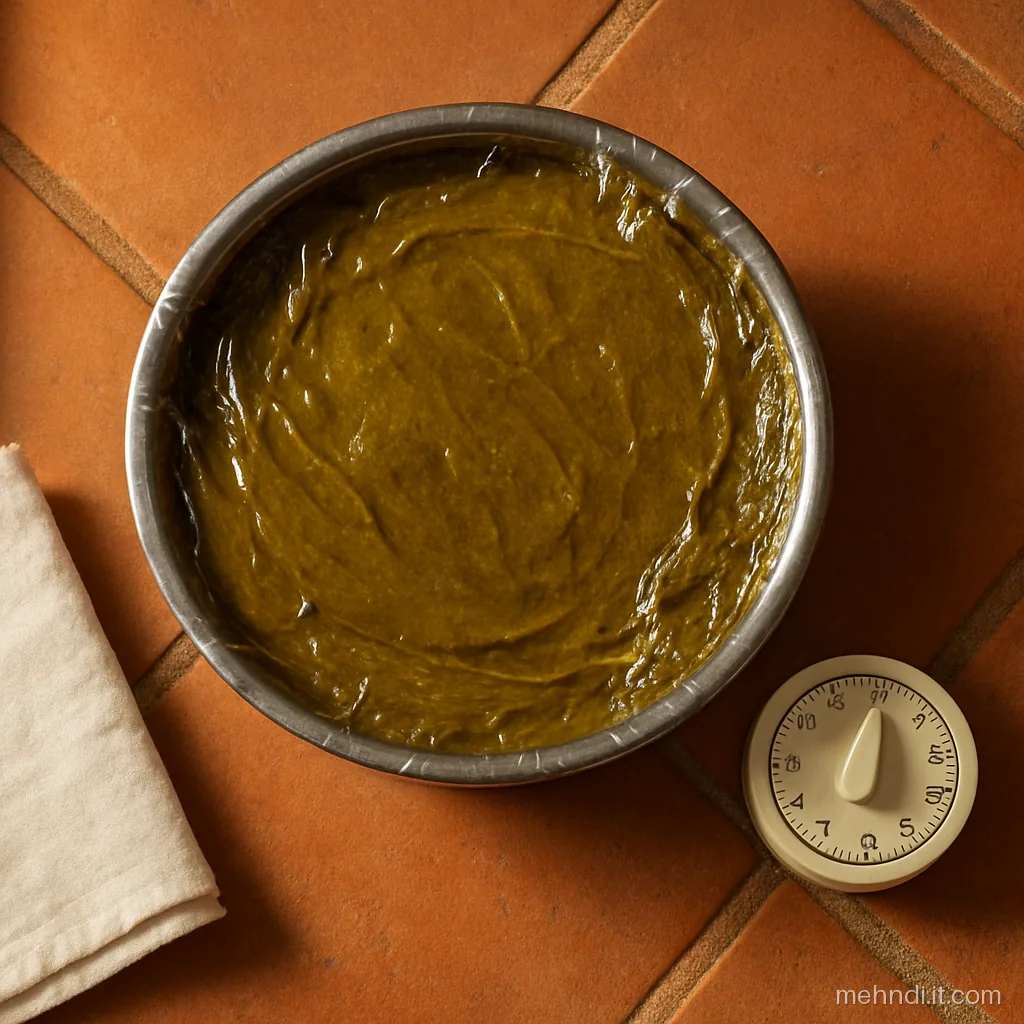
4. Resting Paste Under Wrap
Cover the paste with cling wrap pressed onto its surface and rest it in a warm spot for 6 to 12 hours, until the top looks darker.Rolling, Filling and Storing a Mehndi Cone
Once the paste is ready, roll the cones and fill them. A good cone is tight at the tip and soft enough to squeeze with one hand. Practise lines with it on our mehndi designs for beginners page.
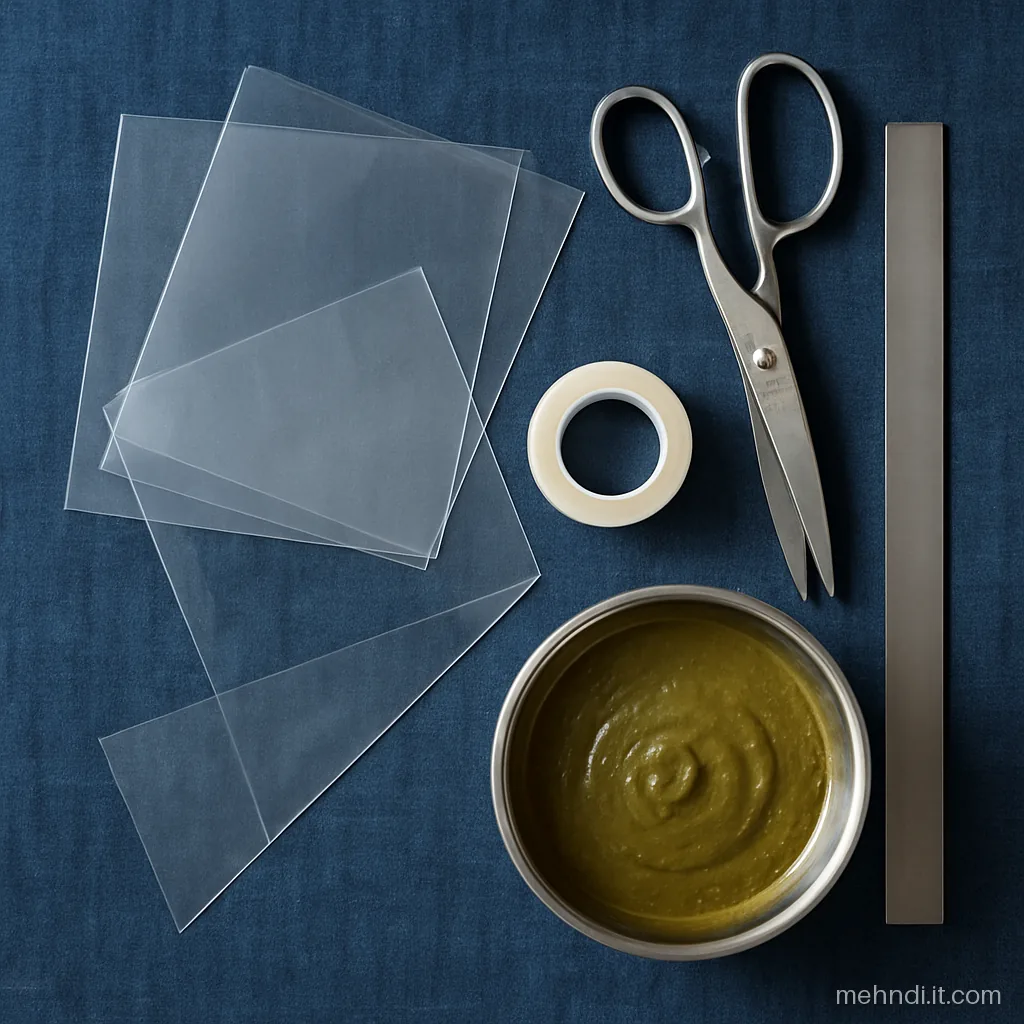
5. Cello Sheet Triangles
Cut each 15 by 20 cm rectangle corner to corner to get two triangles. One sheet gives about 8 cones. Takes 5 minutes.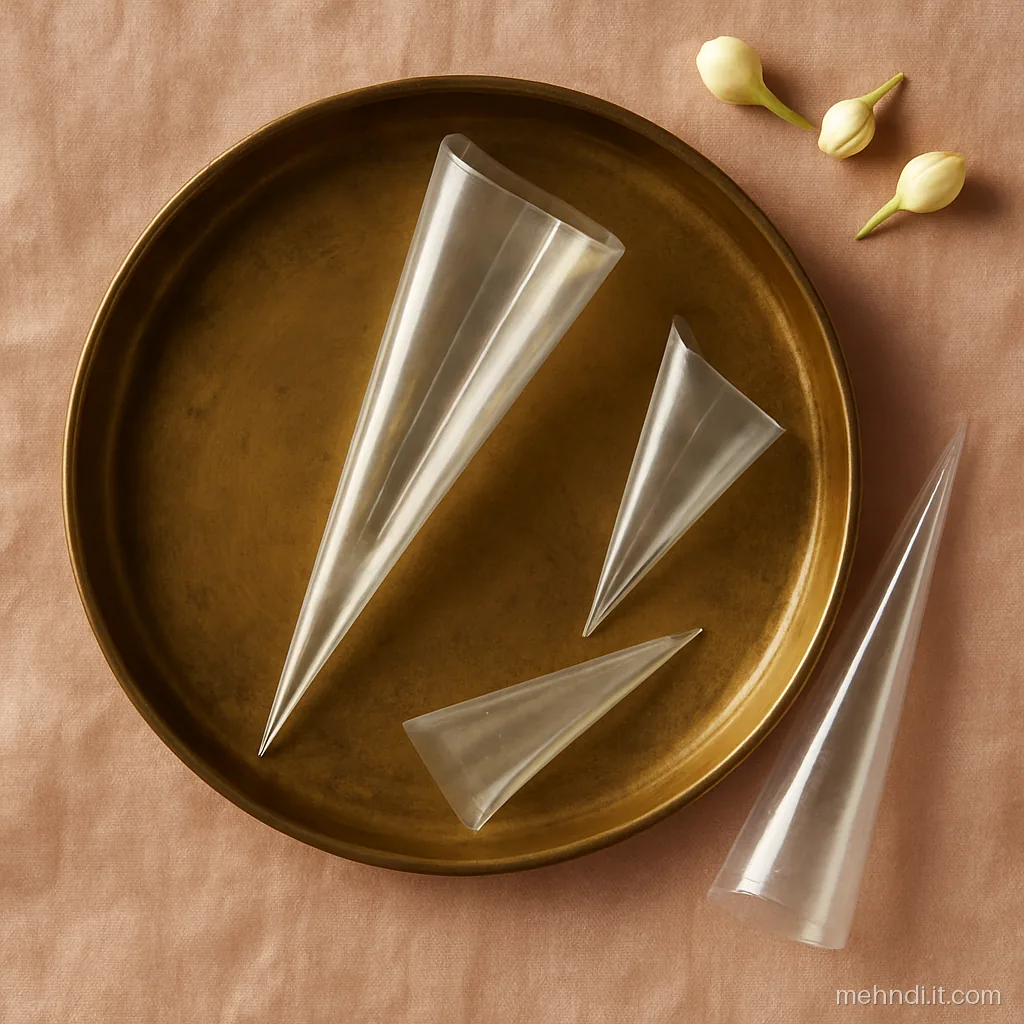
6. Rolled Empty Cone
Roll from the long side toward the point and tape the seam while the tip is tight. Each cone takes about a minute.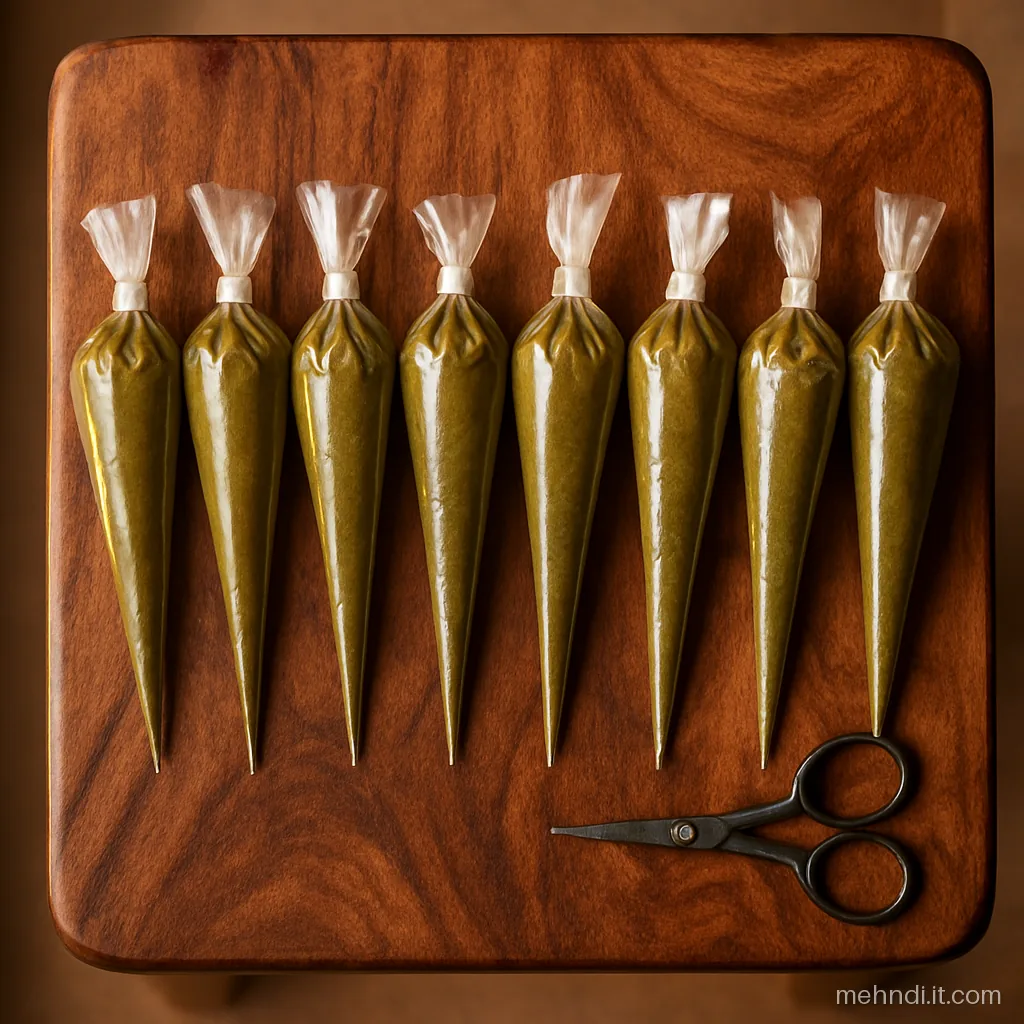
7. Filled Cones in a Row
Fill only two thirds of the cone, push the paste down, then fold the top twice and tape it. Ten cones take about 15 minutes.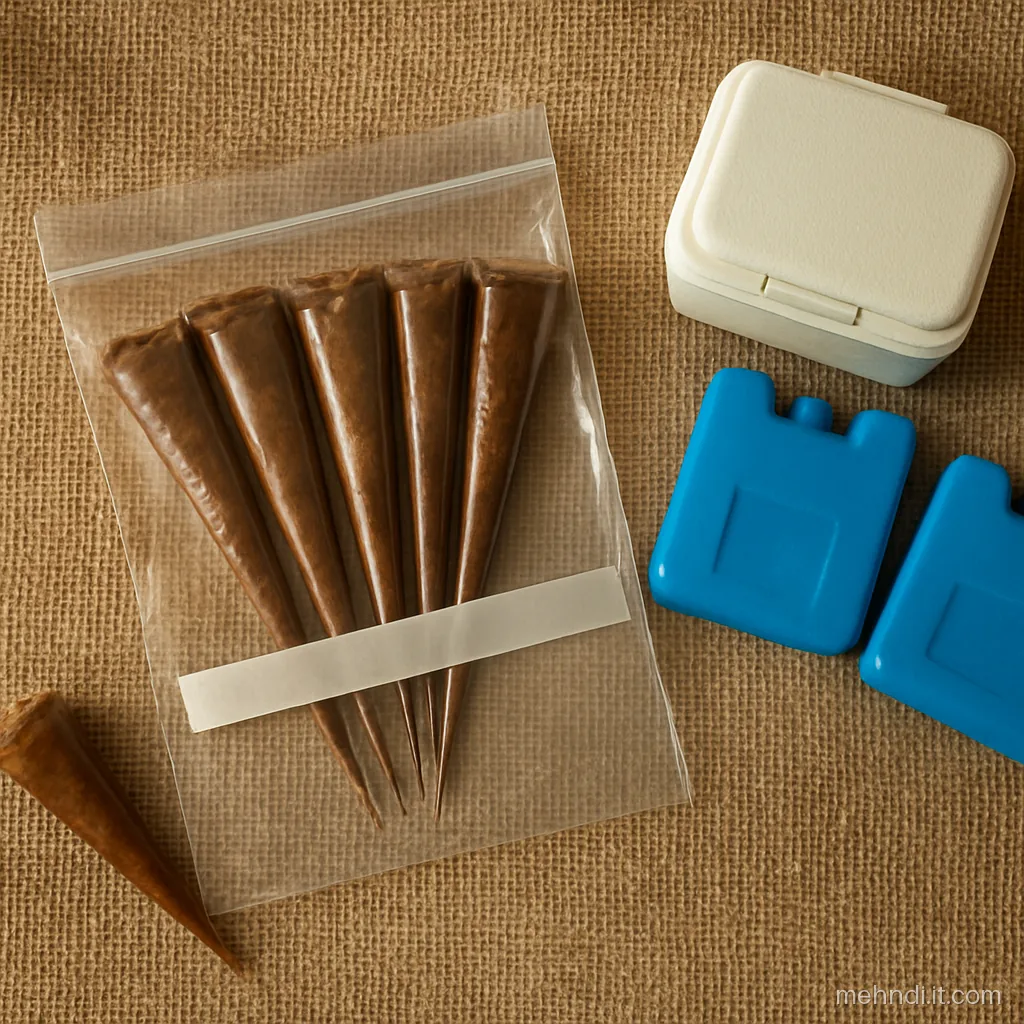
8. Cones Ready for the Freezer
Freeze extra cones in a zip bag right away. Thaw one at room temperature for 15 minutes before use.What You Need to Make a Mehndi Cone at Home
You only need a few things, and most of them are already in your kitchen. The one thing to buy with care is the mehndi powder.
- Henna powder: 20 g of fresh, finely sifted body art henna. Pure henna mehndi powder is made only from dried Lawsonia inermis leaves. It is greenish and smells like hay or fresh grass.
- Lemon juice: About 4 to 5 tablespoons, strained.
- Sugar: 1 teaspoon. It makes the paste smooth and sticky so lines stay on the skin.
- Essential oil: 1 teaspoon of eucalyptus, tea tree or cajeput oil. It helps the stain go darker.
- Cello sheet: Thin clear plastic sheets from a stationery shop.
- Tape, scissors, a bowl, a spoon and cling wrap.
When you shop for heena mehndi powder, read the pack. It should say 100 percent henna, with no chemicals. Skip any pack called “black”, “instant” or “5 minute” henna. Those often have PPD, which can burn the skin. Natural mehndi always stains orange first and darkens over 24 to 48 hours.
How to Make Mehndi Paste: The Natural Recipe
This is how to make mehndi at home that gives a clean flow and a deep stain. The amount fills about 6 to 8 cones.
- Sift: Sift 20 g henna powder twice through a fine strainer or nylon cloth.
- Add lemon: Pour in lemon juice one spoon at a time and mix well. Stop when it looks like thick mashed potato.
- Add sugar and oil: Add 1 teaspoon sugar and 1 teaspoon essential oil. Mix for 3 to 4 minutes.
- Rest: Press cling wrap onto the paste and keep it in a warm spot for 6 to 12 hours. In hot weather, 4 to 6 hours may be enough.
- Check: The top turns a little darker and brownish. Put a dot on your palm for 5 minutes. If it leaves a bright orange mark, the dye is ready.
- Loosen: Add a few drops of lemon juice and mix until the paste falls from the spoon like a soft ribbon, about toothpaste thick.
Too thick, and your hand will hurt. Too thin, and lines will spread. If lines spread, add a pinch of sifted powder and rest it for 30 minutes.
How to Make Mehndi Cone from a Cello Sheet
Rolling a cone looks hard but takes only a minute once you get the trick. Follow these steps.
- Cut the cello sheet into a 15 by 20 cm rectangle, then cut it corner to corner to get two triangles.
- Hold the triangle with the longest side away from you. Put your finger on the middle of that long side. This point becomes the cone tip.
- Roll one corner around toward you to make a cone shape, keeping the tip tight. Then wrap the other corner around it.
- Tape the seam from the tip to the top. Check the tip against light: there should be no hole.
- Fill the cone two thirds with paste using a spoon or a piping bag. Tap it on the table so the paste moves down.
- Fold the top over twice and tape it shut.
- Cut the very tip with sharp scissors just before you start.
Tip size: A tiny snip, about 0.5 mm, is for fine bel lines and Arabic shading. A slightly bigger cut, about 1 mm, is for filling finger caps and gol tikki. Make two cones, one fine and one wide, so you do not keep cutting the same one. When you have your cones, try a few simple front hand mehndi designs first.
Storing Mehndi Paste and Cones
Fresh paste loses its colour power in a warm room after a day or two. Store it well and it keeps much longer.
| Where | How long | Note |
|---|---|---|
| Room | 1 day | Keep it in the shade, covered. |
| Fridge | About 1 week | Keep cones in a closed box. |
| Freezer | Up to 3 to 4 months | Seal cones in a zip bag. |
Thaw a frozen cone at room temperature for about 15 minutes before use. Do not heat it. Never refreeze a cone that has thawed fully, because the stain gets weaker each time. If paste smells sour or very sharp, throw it away and make fresh. Once your design is on, read how to make mehndi dark to get the best colour.
Mehndi Powder for Hair vs Hands
Many people use the same mehndi powder for hair and hands, but the needs are different.
- For hands: You need body art quality henna, sifted very fine, so it flows through a thin cone tip. Freshness matters most, so check the pack date.
- For hair: Hair mehndi powder can be a little coarser. Many people mix it with amla or with water instead of lemon, since lemon can dry the hair.
- Indigo mehndi powder: Indigo is a different plant. It gives a blue-black tone on hair when used after henna. It is not for hand designs, and it should never be mixed into your cone paste.
- Oily hair: Wash your hair first. Natural mehndi for hair works best on clean, dry hair because oil blocks the dye.
For hands or hair, always do a patch test 48 hours before. Put a small dot on the inside of your elbow and wait. Any itch, redness or swelling means do not use it.
Safety Tips Before You Apply
Natural henna is safe for most people, but a few rules matter, especially for kids.
- Use only natural henna. Say no to black henna, which can contain PPD and cause blisters and scars.
- Patch test every new pack of powder or essential oil.
- For small kids, skip the essential oil, or use only a few drops, and keep the paste on for a shorter time.
- Keep the paste on for 4 to 8 hours, and overnight for brides. After you scrape it off, avoid water for 12 to 24 hours.
- A dab of lemon-sugar keeps the paste stuck to the skin. Clove smoke and a little mustard oil are old tips many families still use.
With a good homemade cone, even a simple natural mehndi design looks neat and dark. Browse our mehndi design images for your first try.
Common questions
How long should mehndi paste rest before filling cones?
Usually 6 to 12 hours in a warm room, less in hot weather. It is ready when a test dot leaves a bright orange mark after 5 minutes.
Which essential oil is best for mehndi?
Eucalyptus, tea tree and cajeput are the most used. Use about 1 teaspoon for 20 g powder. Skip it or use only a few drops for small kids.
Can I use plastic from a milk packet to make a cone?
It works in a pinch, but it is thick and hard to squeeze. A thin cello sheet gives a sharper tip and finer lines.
Why is my homemade mehndi not dark?
The powder may be old, the paste may not have rested enough, or it came off too early. Use fresh powder and keep the paste on for 4 to 8 hours.
Is it safe to add coffee or tea to mehndi paste?
Tea or coffee water is a common home tip and is fine for most people. Never add chemicals or black hair dye to darken it. Read more on how to remove mehndi if you need to fade a design.